Stay manual
Hours re-keyed every week, a month-end that breaks when one person is off, and numbers leadership never fully trusts.
The cost: Hours lost every week
A paid diagnostic scopes the work, a fixed-scope build ships it on your live data, and an optional retainer keeps it running. Senior delivery, fixed scope, no lock-in.
A paid, one-week audit that pinpoints where manual reporting or a fragile forecast is costing you, and exactly what to build.
Best for: a COO, operations or finance leader who suspects a manual report, a fragile forecast or a hand-run workflow is leaking time, money or trust, but hasn’t quantified it.
Not included: the production build, live deployment or ongoing support. Those are the build and the retainer.
One production system your team trusts, built on your live data against a written spec and validated before handover. Three outcomes:
Trusted Executive Dashboard · Forecast / Reporting Rebuild · One Automated Workflow (with governance).
Not included: work outside the written spec (handled by change order) and ongoing maintenance (that’s the retainer).
Your systems kept live, monitored and evolving, senior capacity without a full-time hire.
Best for: an organisation that wants its dashboards, forecasts and automations kept reliable and improving, without hiring a €55k+ salaried analyst.
Not included: large new builds beyond the capped block, which are scoped as fresh projects.
Not sure which fits? Book a discovery call and I’ll tell you honestly whether I can help. Engagements start with a paid diagnostic and run into four and five figures for a build.Indicative “from” prices; each build is scoped and quoted from your diagnostic.
When reporting is held together by hand and approvals run on memory, leadership ends up deciding on numbers no one fully trusts. Here’s how most teams cope:
Hours re-keyed every week, a month-end that breaks when one person is off, and numbers leadership never fully trusts.
A €55k+ salary, plus payroll and the effort of managing someone, when the work that actually needs a senior analyst only comes up a few days a month.
Decisions keep getting made on shaky numbers, risk compounds, and the manual work quietly scales with the business.
The job is always the same: take reporting that lives in someone’s head or a fragile spreadsheet and turn it into a system people can trust.
Browser-based automation with Playwright plus interactive Tableau dashboards and predictive models — turning large-scale, cross-regional sales data into trusted reporting for the CEMEA Sales BPR & Systems team, and building automation that removes hours of manual work for freelance clients.
| What’s included | |||
|---|---|---|---|
| A live dashboard leadership relies on | |||
| A fragile forecast or manual report rebuilt and made auditable | |||
| A repetitive manual workflow automated with human oversight | |||
| Governance layer: human-in-the-loop, audit trail, rollback | |||
| Built and validated on your live data | |||
| Scoped from a paid diagnostic, with written acceptance criteria | |||
| A UAT-and-hardening phase before handover | |||
| Runbooks, monitoring and alerting | |||
| Source in your own repository, no lock-in | |||
| A defined post-handover support window |
Modular by design. Start with whichever phase fits, there’s no obligation to take all three.
Find the real problems.
Build and validate the system.
Keep it improving with ongoing support.
Every stage of working together, so you know what to expect before you commit.
We start with a call to go through your objectives, where your data actually lives, and the numbers you want to track: revenue, deals, pipeline stages, team performance. Everything lines up before I build anything.
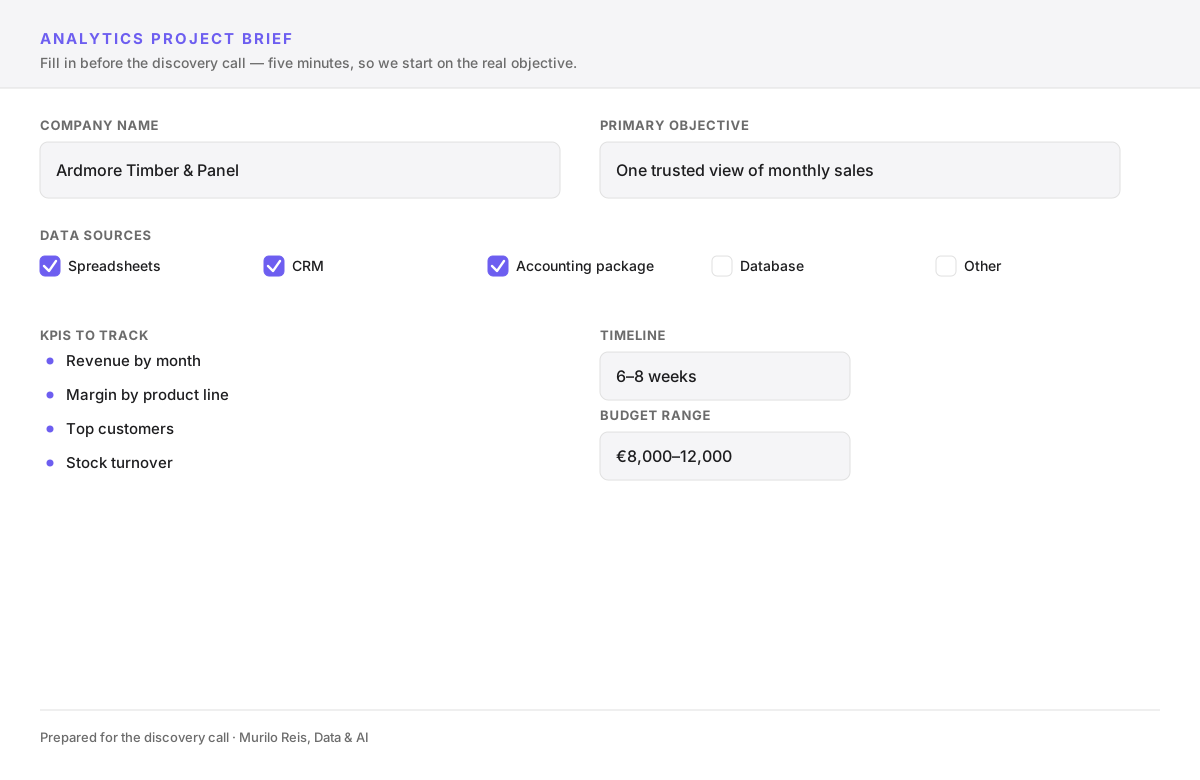
You leave with a written spec and a fixed price, and the diagnostic fee comes off the build. It’s a scoped roadmap, so you decide with real numbers in front of you rather than a guess.
I design to that spec: layout and wireframes for a dashboard, backend work for a reporting rebuild, or learning your business rules so agentic AI can run an automation safely.
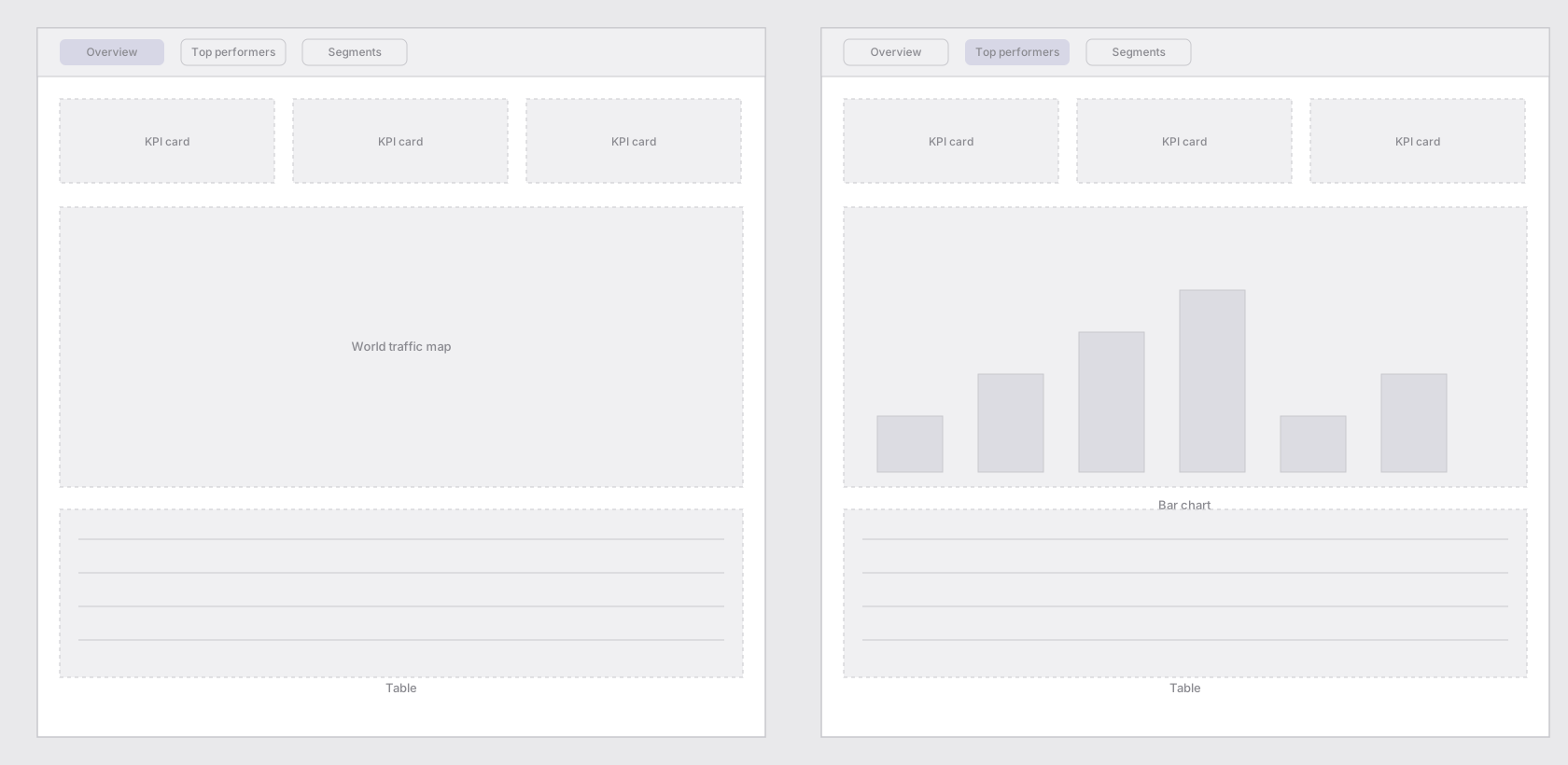
You get a first working version and a short walkthrough video covering the design, the KPIs, and how to explore it yourself. You see it working long before the end.
You review and tell me what’s off. I make the revisions that are part of your build and tune it to match how your business actually runs.
Polished, running on your live data, with insights and recommended actions where they help. You own the source and the workbooks, with no lock-in.
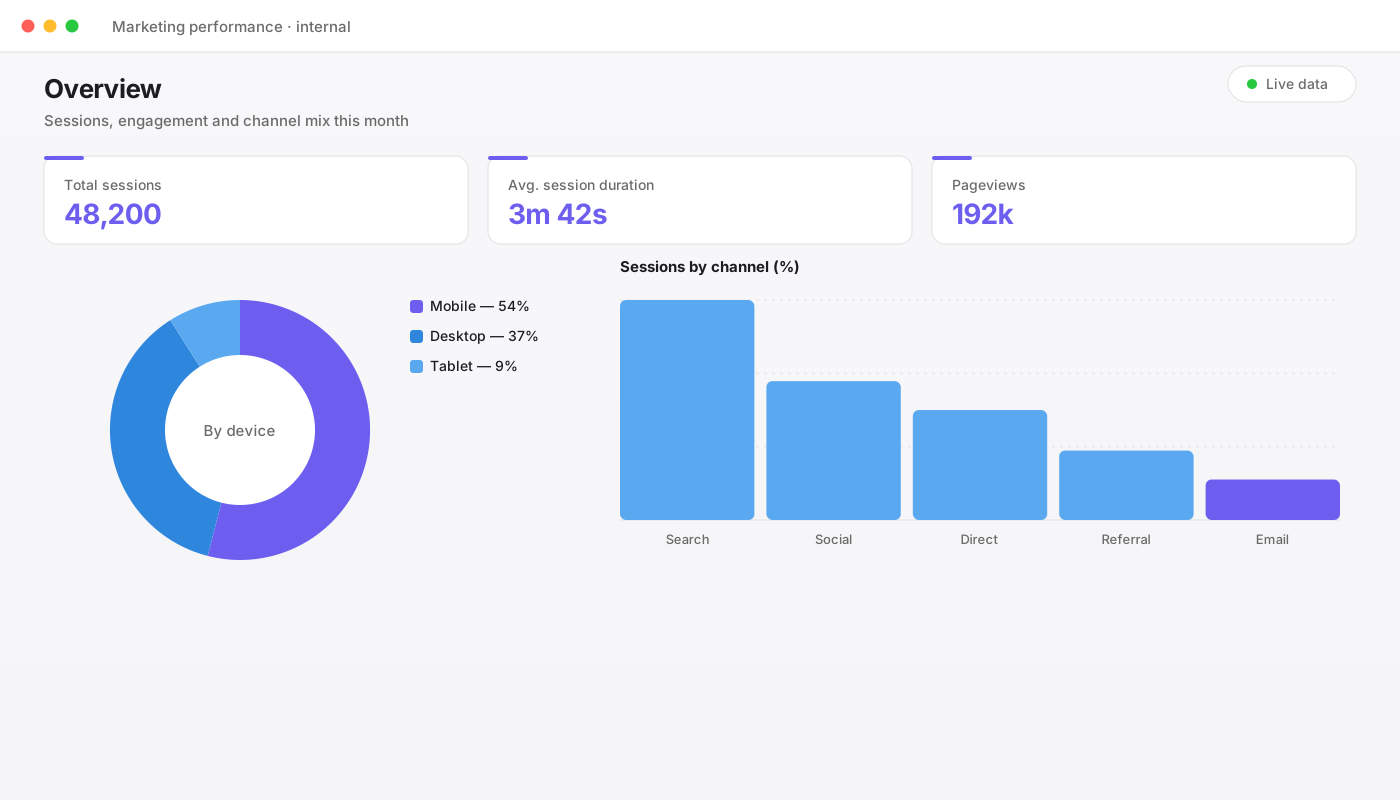
Marketing performance dashboard — overview
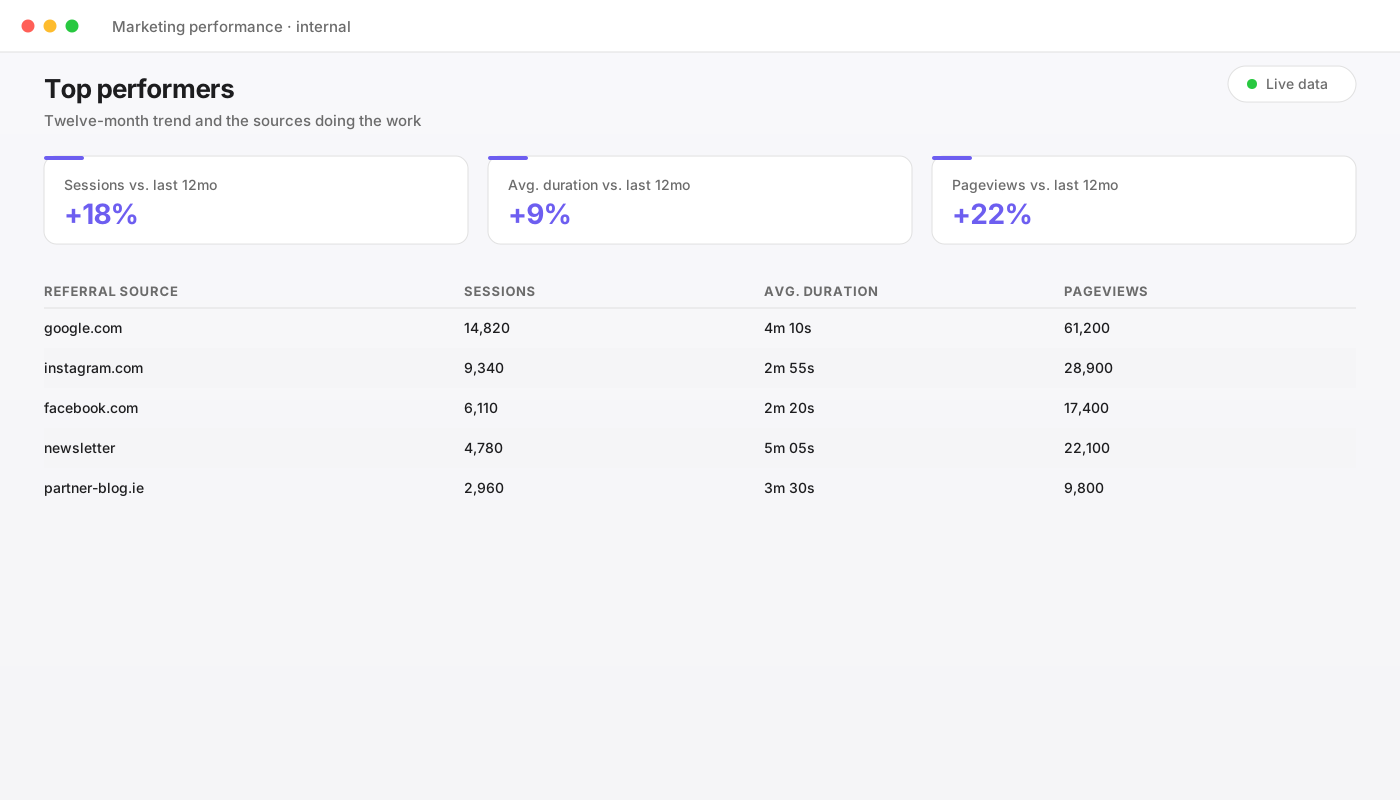
Marketing performance dashboard — top performers
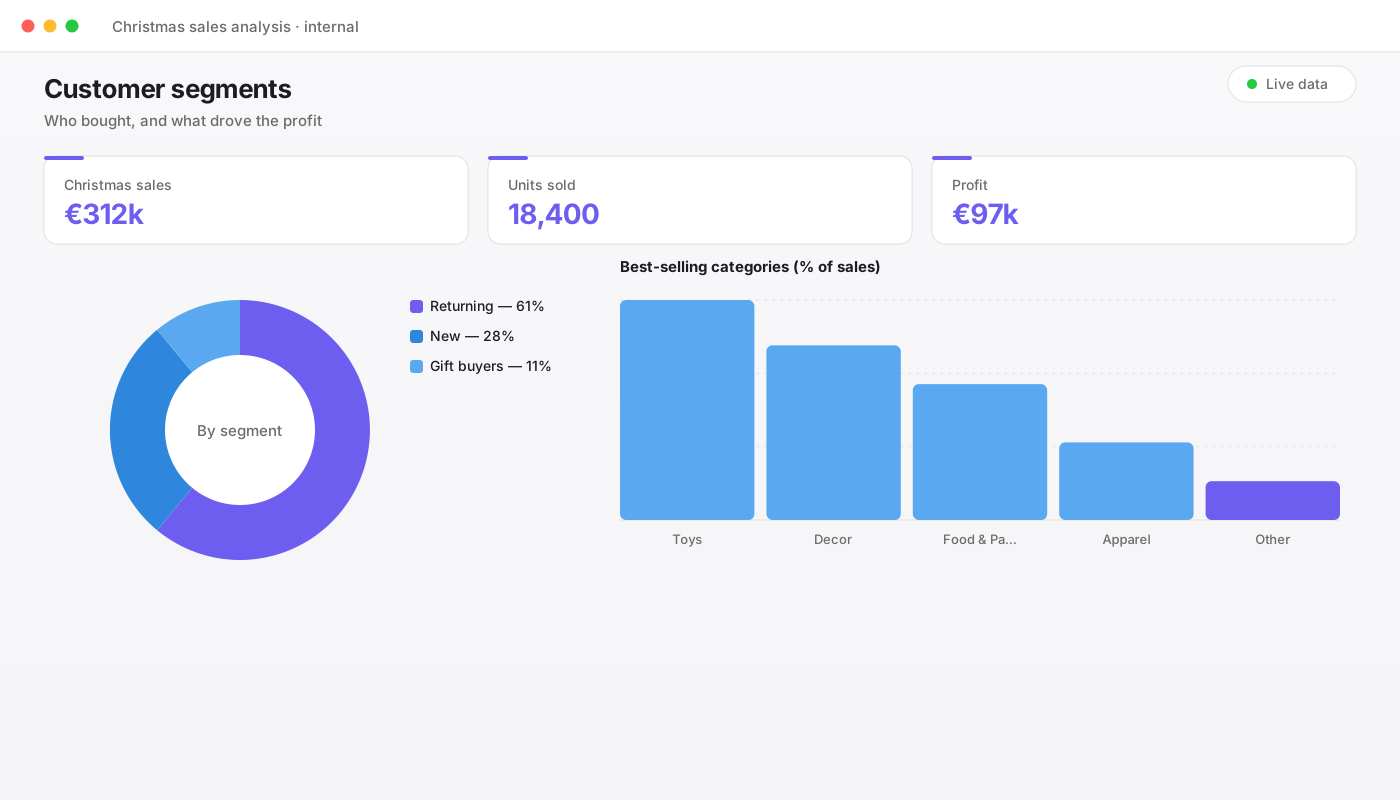
Christmas sales analysis — customer segments
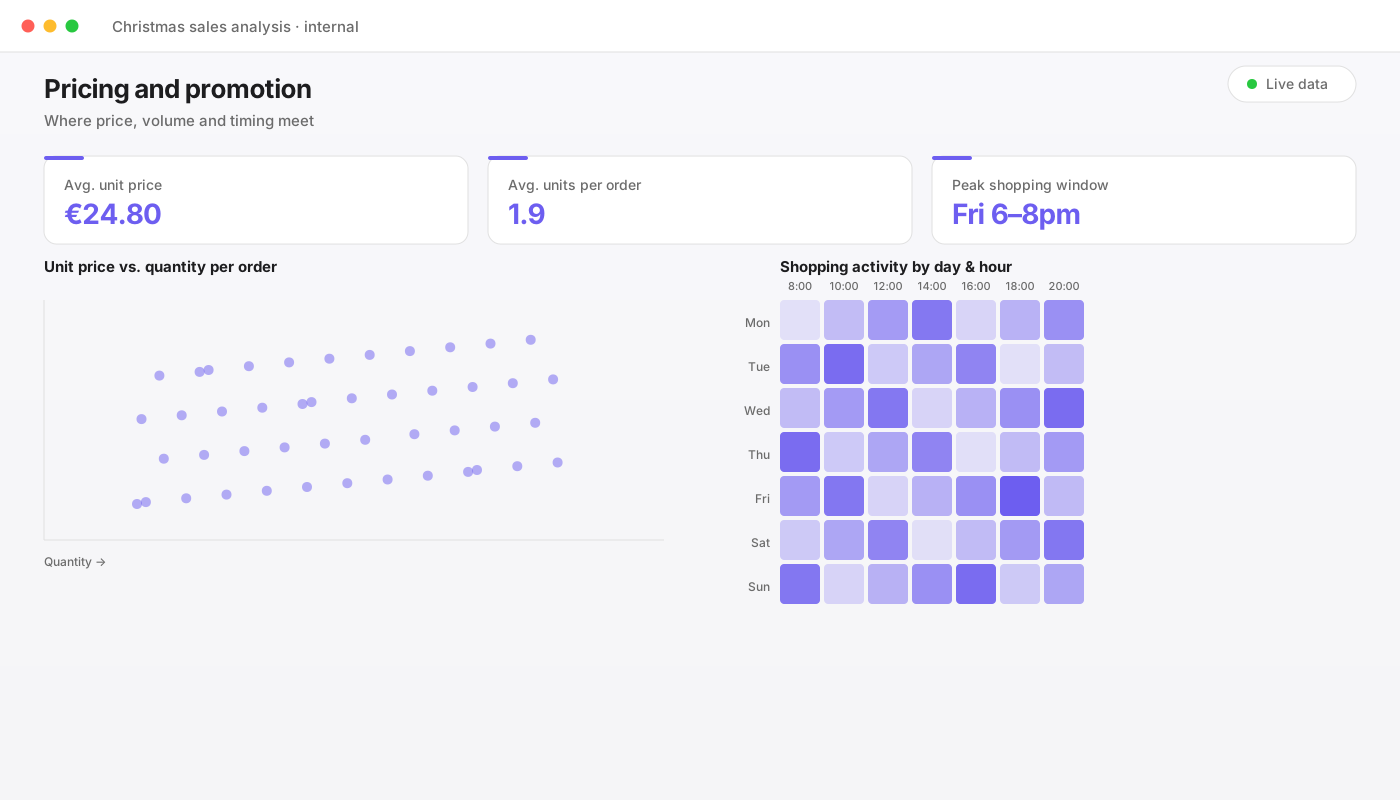
Christmas sales analysis — pricing and promotion
Want it kept live? A rolling retainer keeps your systems reliable and gives you senior capacity without a full-time hire. Each month covers a set number of changes, or new automated workflows and agent skills.
The first step is the diagnostic. Book a discovery call
This is the first sum I run on any reporting or automation brief, so you may as well run it yourself. Put in what the work actually costs you today — the arithmetic is printed underneath, and the numbers stay on your machine.
per week
salary plus overhead
be conservative — I would rather under-promise
a fixed-scope build starts at €8,000
The arithmetic
—
—
A model, not a quote — the diagnostic replaces these estimates with your real numbers. See what that looked like for other teams in the case studies, or take apart five more working models in the playground.
I’ve built the reporting and approval systems a large enterprise sales operation ran on, and delivered a paying client a live profit dashboard that lifted gross profit 20%. You don’t have to take that on faith: we start with a low-risk paid diagnostic, so you see how I work and what I find before committing to a build.
You work directly with the person who does the work, with no juniors and no hand-offs. Everything is documented: runbooks, monitoring and the source in your own repository, so your team can run it without me. For continuity, the retainer keeps a named owner on your systems, and I’ll always be honest about capacity before we start.
That’s exactly why automation ships with a governance layer: human-in-the-loop, audit trails, rollback and edge-case handling, validated in a UAT-and-hardening phase before it touches production. For sensitive or regulated-adjacent decisions I lead with dashboards or forecasting first, where the blast radius is lower.
A contractor takes a spec and bills days. A large firm puts juniors behind a partner. You get one senior person who diagnoses the problem, owns the outcome, and hands over a documented system: fixed scope, no layers, no day-rate clock and no RFP.
Because I won’t quote a build blind. The diagnostic quantifies the cost of the problem in your numbers and produces a written spec with acceptance criteria, so the build is fixed-scope and de-risked for both of us. The fee is credited in full against the build.
Builds are value-priced against the outcome and scoped from the diagnostic, not billed by the day. Fixed scope with a change-order clause means the price holds, and my speed is my problem to solve, not your cost to carry.
I’ll sign an NDA on request, work with least-privilege access and on a copy where possible, and delete data on completion. For any automated decisioning I build in the human oversight and audit trail GDPR Article 22 expects.
You own the source, the runbooks and a documented, monitored system, with a defined support window. Keep it in-house, or take the retainer and I’ll maintain and evolve it: capacity without a full-time hire.
Tell me what’s breaking, roughly what it’s costing, and what you’ve tried. If it’s a fit, we start with a paid diagnostic; if it isn’t, I’ll say so and point you somewhere better.
Engagements start with a paid diagnostic (from €1,500, credited to your build). If you need a few hours of ad-hoc analysis, I’m probably not the right fit, and I’ll happily point you to someone who is.
Prefer to scope it out first? Grab the project brief, or see how working together works.
Last updated 3 August 2026
The short version. The full privacy page has the detail, including which third parties see what.
This site belongs to Murilo Reis, trading as Murilo Reis, based in Cork City, Ireland. Reach me at muriloarielreis@gmail.com.
Only what you type into a contact form — your name, email, message and the optional role, budget and timeline fields. I use it to reply and to work out whether I can help. The forms post via FormSubmit, so your message passes through their servers on the way to my inbox.
No advertising or tracking cookies, and no analytics installed at all. Three values sit in your browser’s local storage — your theme, your answer to the notice at the bottom of the screen, and whether you prefer the portfolio as a grid or a list. They stay on your device. Change your answer any time from “Cookie settings” in the footer.
You can ask to see, correct or delete anything I hold, or complain to the Irish Data Protection Commission. See the full page.
No results